Showing posts with label Discussion. Show all posts

Wednesday, September 4, 2013

Taking Risks in the Gaming Industry

A few years back, developer Quantic Dream brought us Heavy Rain, a modified point and click adventure that puts you in the shoes of a handful of characters thrown into a classic murder-mystery case.  This Playstation 3 exclusive crossed the finish line as a success and though the genre isn't for everyone, Quantic Dream is continuing their trend (like Fahrenheit and Indigo Prophecy before it) with a new IP slated for this fall; Beyond Two Souls.  Even though Heavy Rain received its fair share of criticism, those who understand Quantic Dream's mixed style of cinematic gameplay got a memorable experience from the game and heralded its undeniable pushing of the boundaries acceptable in video games.

So why exactly am I bringing this up now?  Because it has recently come to light that Microsoft turned down Heavy Rain because the story was centered around child kidnapping.  Apparently, in fear of how it'd be received by the media, they told Quantic Dream that the content was a problem and that they wanted it changed.  I applaud Quantic Dream for taking their IP and walking instead of bowing to the demands of a publisher whose familiarity is more prominent in business and sales than in artistic integrity.  I'm not trying to focus on Microsoft here; I'm sure Sony and Nintendo have turned down their fair share of risky proposals.  But the pressing fact here is less about Heavy Rain being turned down, and instead the reason it was turned down.

Refusing to take on Heavy Rain because the story contained a child kidnapping was a decision that could have been very harmful to our medium, had Sony not stepped up to support the project.  Instead of trying to understand the presentation of the content, Microsoft was only focused on the content itself, and from the start considered the blow back of ignorant, letter-writing soccer moms to be more pressing than the evolution of gaming as an art form and a unique style of story telling.  Just imagine if Reservoir Dogs was asked to change its script to remove its highly memorable, character defining torture scene.  What if Children of Men was forced to edit out its visceral, dark violence?  What is left is nothing but a shadow of what the art piece was meant to be.

And isn't there at least a hint of hypocrisy contained in the other games Microsoft have brought to us?  Gears of War has no problem letting you saw someone completely down the middle with a chainsaw bayonet.  Blood, gore, and brutal violence are stacked upon each other without a second thought, and all for the sake of gushy entertainment and shock-factor, but the second a story contains a sex scene or a child kidnapping, its gone too far?  Allowing games to explore morally difficulty themes is how we grow as a medium and evolve as an art form, and without pushing the envelope, video games will never escape the image of immature teenage entertainment.

Film critics can watch a movie and appreciate the fact that every bit of violence, every sex scene, and every other sequence of rape, murder, torture, kidnapping, or war is every bit as important to the story as dialogue between characters.  They understand that if rape takes place in a movie, the film isn't saying "We condone rape;" they are expressing a bigger narrative beyond what's on the screen and weaving it into overall picture.  Why can't games be treated the same way?

Well, the primary factor still holding gaming back is the publicity that gets highlighted by the media.  Grand Theft Auto being blamed for poorly parented teenagers with greater underlying medical issues toting around guns or Mass Effect exploding into the view of parents because it contains a four second, fully censored sex scene; these are just the forefront example of how major news outlets view video games.  But the battle isn't won by kneeling before their wishes and promising to remove all adult content from our medium.  You don't get anywhere by playing it safe and even when you do everything you can to stay off their radar, they'll still dig for a reason to propagate a witch hunt.  "Video games are why kids are overweight."  "Gaming is why test scores are so low."  No matter what, if a new issue comes to light concerning kids, video games will be the primary target.

So how do we deal with the problems the media poses for this art form?  Short answer; we don't.  Rockstar has continued doing what they do best and making solid Grand Theft Auto games, quite successfully, in fact, without any hindrance posed from their past tangos with media spotlights.  Games being successful or praised is not affected one bit by how news casters portray them.  In fact, that's something very positive I can say about gamers in general; our opinions are not swayed by the negatives we read in the paper or see on TV, because we already expect games to be criticized and hated.  Truth is, games have been misunderstood since their creation, with parents and teachers whining and screaming about how their kids will be affected.  We already know full well that we are generally looked down upon by media outlets, and its nothing new when Nameless TV Anchor #406 presses a new story on why playing your 3DS will cause blindness or how holding a controller will develop arthritis.

In the past decade, we have come a long way.  Games are beginning to really blur the line between cinematic experience and fun pass time.  Motion capture and real actors are being used to bridge the gap into reality and renown composers are seeing video games as a dynamic, exciting new form with which to deliver music.  Instead of a room of lone programmers, development teams now have writers dedicated to creating the story, and crafting character personalities.  Environments are created, not to just exist as a plane for your avatar to walk on, but as a delivery method for atmosphere and narrative.  We are constantly maturing and are finally being taken seriously as an art form and we didn't achieve this by listening to the demands of ignorant parents and doomsday prophets who would still complain about the game anyways.  We ignore them, we keep creating, and we continue to expand.


Tuesday, August 27, 2013

What Creates Longevity in a Game?

Yes, hello, my name is Dan, and...uh... I play Animal Crossing.  It feels so good to admit this to all of you and finally get this enormous weight off my chest.  I can't even get out of bed in the morning without digging up fossils, and at night I can't sleep without knowing all of my precious hybrid roses are watered and safe from accidental trampling.  I used to tell myself that I could stop anytime; that I didn't need to play.  But its become more than that.  Playing is my responsibility and obligation.  I am the sole reason that entire town runs and I'm the only thing preventing it from descending into a weed covered anarchy.

If you play Animal Crossing, this probably sounds eerily familiar.  No one can deny Animal Crossing's longevity.  It has enough charm to be a great escape from the stresses of ordinary life; a place you can go where hard work pays off and you're always needed.  Plenty of options await you as well.  Whether you're fishing, catching bugs, hunting for new furniture, or interacting with the village residents, you'll always find a task awaiting completion.

But, Animal Crossing has longevity for another reason, and its a common trait among other games that people can't help but play for years and years: fear.

Now you may laugh; "Animal Crossing?  You mean the child friendly game about befriending cute animals and decorating your house is so addicting because of fear?"  Yes, I realize how daft it sounds at face-value, but with some explanation you'll find it to be just as true.

In Animal Crossing, neglecting your town, for even a few days, means the start of decay.  Your flowers will wilt and die if not watered, weeds begin to spring up all over town, and worst of all, your beloved neighbors might decide to just pack it up and move away forever.  Plus, a slew of new furniture, clothing items, wallpaper, carpet, and shoes come to your town's shops daily, meaning that not picking up your 3DS today could mean missing out on that Roccoco dresser you've been waiting to pop up for months.  Whether its seeing your in-game buddy disappear for good or coming back to find your flower garden in ruin, its this fear that relentlessly grips you and draws you back in every time, ensuring that the cartridge never leaves your system.

Animal Crossing isn't the only offender; this is a very popular mechanic across other life simulators and even MMO's.  With games like World of Warcraft, the fear is more centered around being left behind and not being able to keep up with the competition.  When you have millions upon millions of people playing a multiplayer focused game, playing becomes a race; who can level up fastest, grind for the best gear, and create an unstoppable clan while everyone else is still getting a hold of the basics.  You want to outplay the others, so you're forced to log in as many hours as you can to ensure you stay one step ahead.

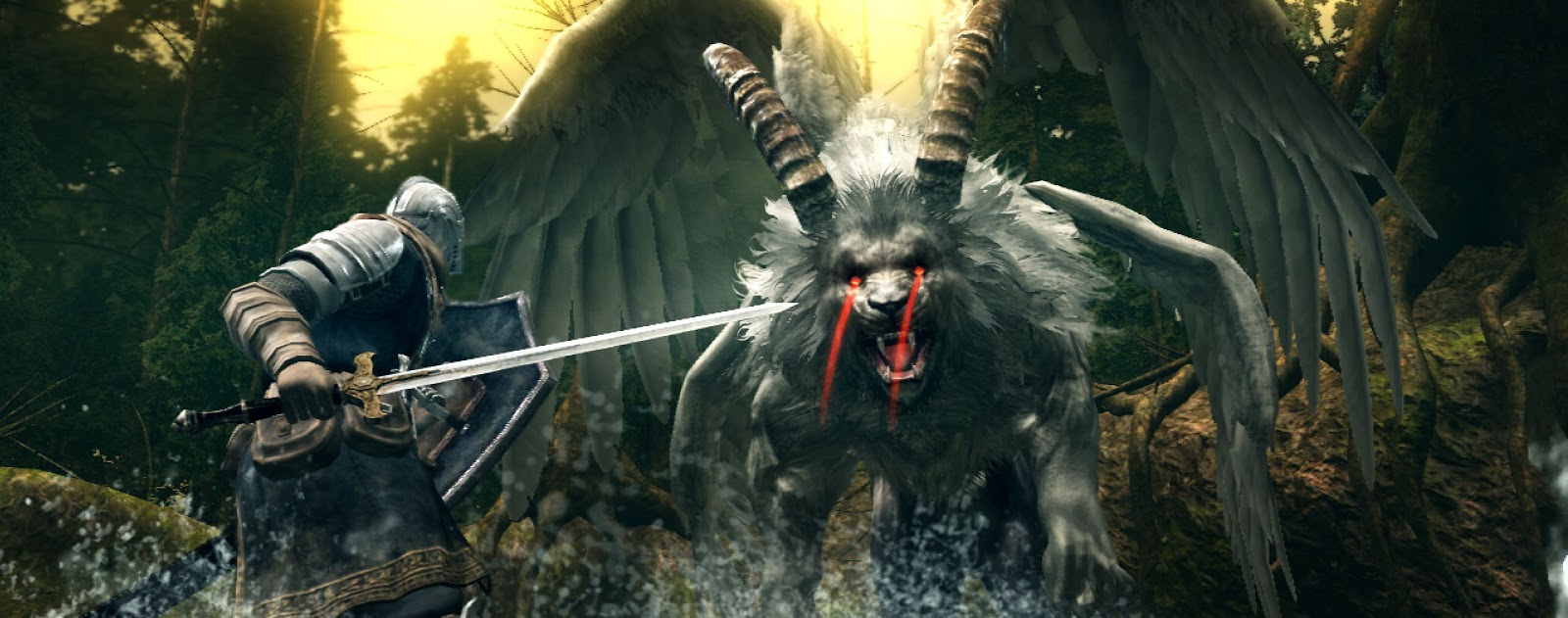
Now, this form of longevity is not necessarily a bad thing.  Obviously enjoyment is at the basis or people would not continue buying WoW expansion packs (and I would have quit Animal Crossing after the Gamecube installment).  But, its interesting look at a different, more single-player oriented approach to longevity and an example of it I find so blatantly well-done in Dark Souls.  This longevity stems from mystery.

I realize that Dark Souls has come up a lot recently, but the reason that I really can't stop talking about it is because the game continues to stay relevant despite primarily being a single-player experience and having been released two years ago.  Dark Souls has a story to tell, but it does not read it to the player like an audio book on a road-trip.  Instead, the story is almost hidden from the player, locked away in the details of the environment, meaningful NPC conversations, and in the item descriptions.  If you just pick up the controller to hit bad guys with swords, then you'll find a great, challenging game with a harsh, but fair combat system.  If you, however, go into the game and begin to absorb the little hints of lore the game presents to you ever-so gently, you'll be gifted with one of the most rewarding lore experiences of this generation.

Within the game there is an opening cinematic, a few short, voiceless cutscenes before bosses, and two ending sequences.  Other than that, you are left to decipher the words of other characters to discover clues that lead to a much bigger painting than initially imagined.  And with this vague story telling comes plenty of secrets to find and a lot of theory crafting and speculation that has kept fans of the game extremely busy even two years since its debut.  This type of tale swapping with other players via online forums and Youtube channels has given Dark Souls a life that will breathe well into the birth of its sequel.  I just hope that Dark Souls II gives us plenty more to stay occupied with.

Of course, Dark Souls, isn't the only title to use this form of narration.  Games like Bioshock Infinite and the Last of Us give the player plenty of hidden gems to find within the game world that can open up new ideas for story hypotheses.  Places like Columbia or the post-apocalyptic city-turned-jungle become characters themselves, delivering information to the player through observation as opposed to dialogue.  Its this sort of story-telling that makes the second, third, and fourth playthrough more gratifying every time.

There are plenty of other forms of longevity to be found across the many genres of gaming, but I consider the duality between games like Dark Souls and Animal Crossing particularly amusing.  Its a battle between wanting to play a game and needing to play a game, and both methods are equally viable.  In fact a lot of games have become mixtures; wanting to experience a story, but needing to grind out more levels.  Wanting to explore more of the world, but needing to forge better gear.  I think all games contain some form of each and its these elements that keep tied down to a series through the long waits between installments.

Wednesday, August 21, 2013

Let's Be Tactical About This: Fall 2013 Imposes Danger on Your Wallet

So far, 2013 has been a steady and constant trickle of worthy titles for all platforms.  Before the summer even started, I had already purchased Luigi's Mansion Dark Moon, Fire Emblem Awakening, and Donkey Kong Country Returns for my 3DS, with Animal Crossing being my last grab in June (at this point, I'm of course forcing myself to ignore Etrian Odyssey IV, Rune Factory 4, and Shin Megami Tensei IV while I finish my pile of incomplete titles).

Successful blockbusters such as Bioshock Infinite and The Last of Us have begun to crowd the Game of the Year ballots and other less impacting but highly entertaining mentions go to Dragon's Crown, Injustice: Gods Among Us, God of War: Ascension, and Starcraft II: Heart of the Swarm.  The stream of titles has also forced me to shelf some games I have yet to dive into, including Ni no Kuni: Wrath of the White Witch, DmC: Devil May Cry, Dead Space 3, Tomb Raider, Sly Cooper: Thieves in Time, Metal Gear Rising: Revengeance, Civilization V, and Pikmin 3 (though that hinges upon me picking up a Wii U at some point).

And at the cusp of the last quarter of the year, I'm still seeing some heavy decisions to be made.  Diablo III (for consoles) and Rayman Legends finally see their release in the beginning of September, with Kingdom Hearts HD ReMix and the highly anticipated Grand Theft Auto V following as the month closes out.  Without letting up, Pokemon X and Y make their debut on the 3DS and Batman Arkham Origins, Assassin's Creed Black Flag, and Lego Marvel Super Heroes will hit stores by the end of October.

All of this is neglecting consideration of the next gen consoles, too.  The Playstation 4 and Xbox One are slated for November, with a load of heavy hitting launch titles to follow.  Watchdogs, Call of Duty: Ghosts, and Need for Speed Rivals show up as worthy multi-platform launch titles, while Sony and Microsoft boast exclusives such as Killzone and Knack for the PS4 with Titanfall and Dead Rising 3 standing in the ring for Xbox.  No matter which console has your vote, you better be ready to spend some money.

So considering each of these titles is going to come out at $35-$65 each (even more if you're a Collector's Edition junkie) how can gamers be more careful with their spending without missing out on potentially historical game experiences in the process?  Well, the short answer is, you can't.

Okay, that's not entirely true, there are such systems in place such as renting, buying used, and trade-in programs that can help you save some dough, but with Microsoft coming this close to stomping out all three of those businesses with the Xbox One's recently slated DRM policies, I wonder if its only a matter of time before those practices disintegrate altogether.  With the large push for digital sales and the bigger hard drives noted for this coming generation, it won't take long for more people to discover the convenience of buying of online purchases.  Steam has all but snuffed out PC games' retail appearances; how long until stepping into a store to pick up your console games becomes irrelevant?

I don't necessarily see digital distribution as a bad thing, so long as the revenues are going to a good cause.  Without the need for companies to package, ship, and sell physical copies to a retailer, the game makers can net nearly 100% of the sales as income.  However, with publishers likely expecting a greater percentage on returns, do you really think that it'll ensure developers getting a fairer cut of the profits?  Judging by the way they are paid currently for their hard work, I highly doubt a higher margin will change anything.  And as gamers, we aren't likely to see the savings passed onto us either.  We'll be charged the same, because we all damn well know we're willing to pay the same.  As long as we demand enough to meet their supply forecasts, pricing will be largely similar to what it is today.

So what's the best solution to saving money?  Well, as painful as it is: wait.  Preordering and Day One purchases don't have to be a priority.  As fun as it is to feel ahead of the curve and experience the wave of excitement along with your fellow gamers, showing a little patience and waiting for a price cut or sale can really make a difference.  Make your purchase decisions wisely and try not to attribute too much value to a title that hasn't even been released yet.  Though that Limited Edition art book and the rest of the Collector's package might be staring you in the face, if the game not all its cracked up to be, you're left with a $60 disc you hate and $40 worth of junk you no longer want to look at.

Monday, August 19, 2013

Assassin's Creed IV Black Flag: Is This The Change of Pace the Series Needs?

Assassin's Creed seems like an odd science project; a passable game that partly exploded in its creators faces, but also gave birth to a widely successful series.  With flawed systems such as horrendously boring combat and repetitive mission structure, its quite the surprise that the game gained so much momentum.  But that time was a bit of a dry spell for gaming, and Ubisoft was at least being ambitious with its ideas in a desert of sequels and reiterations.  Free climbing, crowd based stealth, and hidden blade brutality set during the Third Crusade were promises everyone looked forward to, but finally seeing the fully rendered (mostly historically accurate) holy cities upon release was a memorable moment to be sure.  Though not short on glitches and rough story segments, Assassin's Creed shepherded waves of new fans and ascended Altaïr as one of this generation's top bad-asses.

Assassin's Creed II and its immediate sequels Assassin's Creed Brotherhood and Assassin's Creed Revelations followed the story of a new assassin, Ezio, during the gorgeous but dangerous Italian Renaissance.  Though these titles fixed a lot of the series' previous problems by varying up the missions and granting more combat options, glitches were still a noticeable blemish and the fighting system was a slow paced waiting game with little challenge outside of "press counter button now."  But, all three games were enormous in scope and packed its characters and setting with life.  The Ezio trilogy deserves a top 20 spot in my best gaming experiences of this generation, with the overarching story concerning Desmond Miles proposing many mind-bending questions players couldn't wait to have answered.

We thought that answer was going to be Assassin's Creed III.  It looked fantastic on paper; a new assassin, the story bringing us to newly founded America, ship combat, frontier exploration, hunting, and a slew of interesting characters derived from the Founding Fathers themselves.  It seemed fresh, and I thought we were going to get a completely changed game out of it.  Well, this title was different to be sure, but all of those changes really weren't as exciting as they could have been.  Free climbing around Boston was dreadful as the city's buildings stood too shallow to make for exciting platforming or a successful escape from armed guards.  Where Venice, Rome, and Florence all gave Ezio a tightly woven playground to go wild with, the colonial locations in Assassin's Creed III had dreary wide open spaces and plain, dull structures to get shot on.  It didn't help that Conner, our new assassin, was also a pretty insufferable character.  Brash, wild, and close-minded, he's about as far as you can get from a stealthy justice dealer.  His only redeeming quality is his bravery and even those moments lacked impact due to the B-grade voice acting.  Frontier exploration was a mediocre distraction, if anything; there was lots to do, but almost no reason to do it, and tree running was exhilarating, yet inaccurate and clumsy that often caused more grief than its worth.  The ship combat was the only exciting and memorable part about the game, to be honest, and even that needed quite a bit of work and was fairly limited to a handful of missions.

So is Assassin's Creed IV: Black Flag finally the first step in a new stride?  Taking control of Conner's grandfather, Edward Kenway, we take on the seven-seas during the golden age of piracy where we can plunder and loot while singing a merry song.  What do you do when a series goes stale?  Well, you add pirates of course!  Gamers love pirates!

Sarcasm aside, all of the gameplay reveals of the open sea, ship combat, and island exploration look pretty astonishing.  Its certainly giving a well-loved series a fresh coat of paint, even if pirates have already run their pop-culture course.  And I'm more than happy to see the sailing and ship combat becoming a primary feature.  The great number of explorable islands scattered about the open sea gives me the impression of a world I'd be happy to get lost in.  Where the previous Assassin's Creed titles gave the option for exploration, Black Flag seems to place an emphasis on it.  The game's vision appears to be incredibly wide-set, giving your character gigantic ruins and caves to discover while placing the overworld on an even bigger open ocean.  A lack of loading screens is impressive, delivering a true sense of freedom as Edward seamlessly sails from port to port, stopping by harbors and islands without skipping a beat.

But is this enough?  No matter how shiny, a fresh paint job won't make vehicle run any smoother.  Though the visuals have gotten a next-gen console overhaul, the mechanics regarding stealth and combat look largely the same.  Free running along overgrown Mayan architecture looks incredible (and boat loads more exciting than what Assassin's Creed III's locations allowed), but little has changed regarding the tedious swordplay.  The addition of over-the-shoulder aiming for the firearms is actually a long-needed touch, though its hard to tell exactly how precise the shooting will be.  But perhaps its safer to wait until I have my hands on the controller; the combat could have very well been tightened up and feel much different to how it appears.

Overall, I'm hopeful.  Even if the combat and mission structure are still disappointing, I wouldn't mind spending all day just sailing, looting ships, plundering islands, hunting sharks, and swimming around underwater caverns.  Black Flag gives me the impression that I could lose hours upon hours of my day to it without a single notice, getting absorbed into the vast and lush world.  Though the Desmond story will need some immediate CPR (and perhaps I'll cover that as the release date draws closer), I'm ecstatic for what looks to be a sturdy next-gen launch title.

Friday, August 16, 2013

Capcom Returning Resident Evil 7 to its Survival Horror Roots. But How Much Damage Has Already Been Done?

Fans finally have Capcom by the face.  The key is to not let go
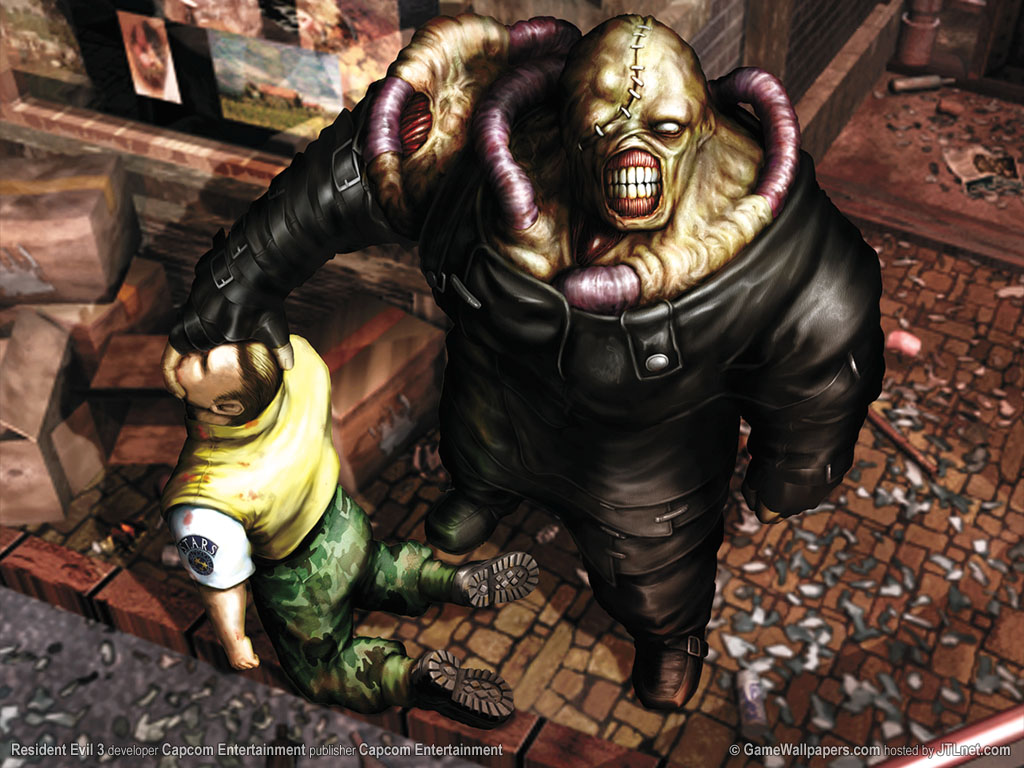
In a recent interview with MCV (found here), Capcom has announced recognition of the negative feedback surrounding 2012's Resident Evil 6 and have stated that the next title on the docket, Resident Evil 7, will be a return to the classic horror gameplay on which the series' predecessors were founded.  That's right, the very core element of the franchise, neglected by its own creators, is finally making a comeback.  It only took Capcom ten years worth of screaming fans to realize it (though I'm sure the poor sales of RE6 rung in their ears louder than any fan's plea ever could).

Its a bit of an odd coincidence that barely three days ago, I posted my thoughts on Dark Souls II and my fear the series is slated to follow in Resident Evil's footsteps.  As a game gains recognition, its very understandable for publishers and developers alike to ask, "What we can do for the next game that will equate to even more recognition?"  And unfortunately, most companies narrow their vision to the most short-sighted answer possible; to integrate current popular features into their titles in order to set their scopes on the mass market. And we see the result time and time again; the sequels disappoint, sales begin to drop, the company tries to recover by implementing even more elements they think the general public craves (cover based shooting, weapon crafting, multiplayer) only for it to backfire with the sound of a million angry nerds.  But low and behold, history is destined to repeat itself, and even more up and coming game companies eagerly line-up for the guillotine titled, "Franchise Suicide," so long as the severed head can rest comfortably on a pillow of dollar bills.

Maybe this is just my naive observation, but it seems a lot of the companies making these mistakes are non-western developers trying to appeal to a western audience.  Just look at how Japanese publisher Square-Enix has transformed the Final Fantasy series over the years; catering more and more to a primarily North American audience (for gods' sake, Final Fantasy XIII features a character named Sazh Katzroy, a black man with an afro housing a baby Chocobo).  Capcom is still trying to scrape the bottom of the ice-cream carton that was Resident Evil 4's explosive success in the west.  And now Namco Bandai is presenting clear signs of similar strategies regarding the upcoming Dark Souls II.  I understand there is good reason to aim your product at a target, especially one as big as the Americas and Europe, but publishers make the constant mistake of thinking only one type of gamer exists in these countries.  I've said it before and I'll say it again; there is an alarming disconnect between publishers and their consumers and its plaguing the game industry.

Nope, I wasn't kidding
But let's switch back to Capcom.  Here we finally witness a company admitting its recent faults and actually announcing planned changes to alleviate these stumbles (if you can call ten years of bulldozing yourself into a hole "stumbling").  That's right fellow Resident Evil fans; we're finally getting the attention we've begged for and its paying off with a whole genre revival.  However, let's not get too excited all at once.  If we're being honest here, there is no way in hell Capcom would be reverting the series back to its roots if Resident Evil 6 had turned the profit they expected.  No matter how many more message boards, forums, and blogs continued to erupt with fan disappointment, Capcom would continue to follow the guaranteed cash flow.  They would drive thirty more stakes into the heart of the games we love until they soaked up every last drop of golden blood from the dead corpse.  And because I'm so sure of that fact, I will remain extremely suspicious regarding Resident Evil 7.  Personally, no amount of good news from the mouths of Capcom could undo the years of outright ignoring the very fans who breathed life into their company and kept it alive.

Shifting gears from all the negativity, I wanted add that I'm very proud of the gamers and reviewers alike who covered Resident Evil 6 justly.  All of the long-time fans who weren't afraid to proclaim that the game was full of flaws and without an identity (as much as it hurts to admit that one of your favorite franchises of all time is no longer what is used to be).  Gamers have always been pushovers, to a silly degree.  We'll get on the boycott bandwagon for a game one day, but the second we see something that suits our fancy, we're off preordering the Ultimate Limited Collector's Edition for $150 of our hard earned cash.  But while 5 million sales is still way too high for such a mediocre game, I'm glad that Capcom got a clear message from its fans regarding Resident Evil 6; "We do not want this."

Remember, in a capitalist economy, your dollar is your vote.  What you do and don't spend your money on could very well guarantee that thing's success, failure, change, or even revival.  I urge not just gamers, but all members playing a role in this society to really take your purchases to heart.  If you don't agree with something and it doesn't meet your standards, the best way to send a message of your distaste is to not buy it.  Show companies that they can't coast by with mediocrity and that we have standards.  Demonstrate that we're not a "one size fits all" audience and that some of us will not pump out money for what is merely a passing grade.  It comes down to us standing by our wants and using our power as consumers to steer the gaming industry to a place of quality, where publishers, developers, media, and players can all benefit equally.

Tuesday, August 13, 2013

Why I'm Worried About Dark Souls II

Every death is a lesson.  Fans of FromSoftware's Dark Souls know this all too well, as 2011 became the first time gamers embraced masochistic difficulty levels since the days of the NES.  Rightfully marketed through the tagline "Prepare to Die," Dark Souls is heralded as one of the most punishing, yet rewarding experiences of this generation.

Predictably enough, a sequel has been announced for the end of March 2014.  We've seen a few gameplay demos from E3 and a teaser trailer featuring some additional unseen footage, but the majority of Dark Souls II information remains hidden from the public.  So why is it that long-time fans of Dark Souls and its spiritual predecessor Demon's Souls seem so worried about the direction the series may go?  Well, here are a few reasons:

Hidetaka Miyazaki, Director and "Godfather" of Demon's Souls and Dark Souls will not be a part of the Dark Souls II development process

In a preview featured on Edge's Online iPad app, Miyazaki states, "I will not be involved in the actual development of Dark Souls II.  I want to clarify that I will be a supervisor, not the actual director or producer." He goes on to clarify, "There will be two directors for Dark Souls II, which I have secured myself", and later admits, "The decision about the new assignments was not made by me; it was made by FromSoftware and Namco Bandai as a whole."

"It was a company decision," clarifies Namco Bandai producer Takeshi Miyazoe.

This is a problem.  You may be asking, "Well 'supervisor' still means he'll still have a big role, right?"  But, from the rest of the interview, it doesn't sound likely.  Supervisor, in this case, seems to be more apt to making sure projects are starting on the right foot and backing away to let the teams do their parts.  Again, this is a problem.  Its hard to know exactly where the fault lies or what transpired to lead to this "company decision."  Regardless, Miyazaki, an ambitious genius in crafting Dark Souls' ambiguous and mysterious world, is going to be missed.  I think Edge's staff said it best:
"This is a crushing revelation for any hardcore fan of Demon’s Souls and Dark Souls, akin to a cinephile learning that Pulp Fiction 2 is in production, but that Quentin Tarantino isn't attached to the picture."
Dark Souls story was not easy to follow and is scarcely present if you ask any casual player.  Aside from an opening cinematic and a few vague cutscenes, the narrative at hand essentially takes a backseat to the tight gameplay and obscene challenges.  But ask any hardcore Dark Souls fan, and they'll explain to you why the game has some of the deepest, darkest, and most satisfying lore to uncover that really makes your experience come full circle.  Instead of lengthy cutscenes and blatant statements of objectives, Dark Souls' dramatic story is only present in the little details of the world.  Through item descriptions, load screens, NPC dialogue, artistically crafted environments, and a lot of fan driven speculation, the history of this intertwined adventure starts to slowly make sense, as you see connected spiderweb of events and characters begin to make itself apparent.

Miyazaki intended it this way.  He has said before how he wanted the narrative of Dark Souls to be very Wiki driven and how important it was for the community to use their collective imaginations to fill in the gaps.  And he was right.  There is no doubt in my mind that the Dark Souls wouldn't be what it is today if they weren't forced to come together to exchange information and ideas regarding items, factions, world traversal, secret collectibles, and lore.  Without such a bold story, its safe to say that this dungeon crawler would not still be one of the most talked about games in the last few years.  Hidetaka Miyazaki will be sorely missed and we can only hope that his absence does not hinder the incredible story presentation of this franchise.

Tomohiro Shibuya, co-director of Dark Souls II, goes on to state that the themes, including the story, will be more straightforward
"I personally feel that the covenant system was something that was difficult to fully absorb and experience [in] Dark Souls, and I intend to make it more accessible to players. And that's not just with the covenant system, but with a lot of other aspects that I felt were difficult to adapt to. I will follow the same concepts as Dark Souls, but there were a lot of hidden story elements that some players may not have caught before, and I'm hoping to make some of that a little bit more clear or directly expressed to the player as well - not just in the story, but messaging. A lot of elements were very subtle in Dark Souls, and that was something that was characteristic to Dark Souls. But I personally am the sort of person who likes to be more direct instead of subtle, so I think that part of me will [result in] a difference [for] players when they pick up Dark Souls II. It will be more straightforward and more understandable."
Well, it looks as though my fears have already been confirmed (though, I will admit, a lot of this information could have a different meaning than how it sounds due to errors in translation).  I understand what Shibuya is going for; you spend time creating an expansive, interconnected world with a rich history, and yet half of the players who pick up your game will never understand it.  I agree, that is a shame.  A bigger shame, however, is thinking the solution is to go in the exact opposite direction with story presentation and bash the player over the head with elements and secrets that would have been a hundred times more rewarding to figure out on their own.  It seems like the co-director is misunderstanding exactly what has driven the Dark Souls community for so long and why we are so encompassed and dedicated to its lore.  Its the mystery and the gradual linking of the missing pieces that gives the experience such a gratifying overtone.

One thing story writers need to understand is that if a reader/player/watcher is into what you're presenting, they will dedicate themselves to figuring it out, no matter how vague.  This is exactly the force behind George R. R. Martin's successful A Song of Ice and Fire series.  The storytelling is vague and slow, yet deliberate and interconnected.  Fans have been reading, guessing, speculating, and interweaving the story for decades because that's half the fun of taking part in the adventure.  You can't appeal to everyone; some people are completely okay watching Game of Thrones on HBO to get their fix, but its the dedicated fans and their continuous activity that gave Game of Thrones the opportunity to exist as a show at all.  Without the original fans, without the hardcore readers and lore junkies, the series would not be what it is today.

Shibuya describes vehicles as something they want to implement in Dark Souls II
"We want to constantly think of something new that hasn't been tried before, so that's where that idea [of the chariot] came up."
A chariot?  Vehicles?  Possible horses/mounts?  My first question is "why?"  Looking back on the entirety of Dark Souls at no point do I stop and think, "You know what would make this section better?  A chariot.  Or a horse to ride."  It wouldn't fit with the overworld layout whatsoever (lots of tight corridors, dense forests, dark caverns, and castle halls) and definitely wouldn't make world traversal any easier (or maybe it would make it easier, and that would for sure be a problem considering the difficulty and dreaded danger of getting from one end of the level to the next is a key aspect in the game).

It seems as though they're trying to take a page from other RPG books.  "Is your game in a medieval setting?  Well, then you need horses and horse combat!  Didn't you hear?  That was all the rage in Skyrim!"  But what major publishers are missing is that not every game is supposed to be Skyrim.  I like Skyrim, but I don't want to buy another copy of it every single year, trudging through the same motions with mimicked gameplay elements and story ideas.  Not every RPG needs to be a strict copy of one another, in fact, that is exactly why Dark Souls is so incredibly refreshing!  And speaking of Skyrim...

Namco Bandai, Dark Souls publisher, wants to treat Dark Souls II like a AAA title in order to "widen the net"
"Demon's Souls, it was very focused, small-scale.  We're treating this [Dark Souls II] as a massive, massive triple-A title.  We're going to go guns-blazing with it, and hope to God that it works.  We're going after people who love and adore Dark Souls, while hopefully widening the net a little.  I'm not saying that every Skyrim player's going to be jumping on Dark Souls, but it would be nice if some of them did."
This statement, delivered by Lee Kirton of Namco Bandai's PR, nearly sends me over the edge.  It just goes to further show how completely out of touch video game publishers are with their consumer base.  Dark Souls was built upon a small, but loyal fanbase.  Dark Souls also sold incredibly well thanks to the word-of-mouth delivered by these fans.  But that's never enough is it?  Namco Bandai wants more; they see the RPG world as a large piece of cake, and currently Skyrim is holding the biggest slice.  As if players only want to play one type of game, over and over and over again, and can never buy or play another game so long as they own that first game.  Its incredibly insulting that RPG fans are getting lumped into one synonymous group that can be tricked into purchasing a game because it has the same features as Skyrim, or vehicle sections.

Widening the net is exactly what caused the downfall of games like Dragon Age 2, Assassin's Creed 3, Dead Space 3, Resident Evil 6, and Mass Effect 3; they have been trying to capture a bigger audience by implementing the elements that are popular at the time (3rd person cover shooting, large cinematic set pieces, weapon crafting) meanwhile throwing out all of the aspects that made the original fans fall in love, and support, the series in the first place.

Nothing is more upsetting to me; seeing an incredible IP become franchised and strapped to a milking machine the second it gains sizable attention.  The vultures swoop in to reap every drop of success they can get out of it before the sales figures start to drop.  And the worst part is, the publishers will never learn.  They'll blame the poor sales on "poor marketing strategy" or "distribution issues," never getting to the real heart of the issue; they alienate the fans that held the series on their shoulders for so long while trying to capture new fans who will never care enough to support the longevity of the franchise.

But maybe that is the age we live in; I mean, even indie titles, the rare breath of fresh air that broke the monotony of this generation are being honed in on by Sony and Microsoft (even Nintendo is starting to hop on this bandwagon) because of their growing popularity.  Both companies understand that controlling this emerging market will be key to controlling the large sum of money flow and downloads come the next wave of consoles.  All I know is that it worries me and I hate seeing series that I once loved and dedicated my time and money to get destroyed in the process of waging war over the biggest slice of the consumer pie.

Not every title needs to be AAA (isn't it funny how lately, the term AAA is more of an insult than it is a badge of honor?  To me, AAA means "cranked out as fast as possible for the sake of maintaining market share").  Its okay to capture a niche market and its okay to be satisfied with high praise and good sales instead of hungering for more money while throwing all excellency out the window.  Its incredibly short-sighted and only compounds the evidence that publishers really don't give a shit about the creative properties they manage.  They would see them all burn to the ground if it meant making another dollar.